
Contact
Email: po.chavula@gmail.com Email: paul.malizgani@umu.se Email: paul.chavula@unza.zm Mobile: +260 975 190 047 Google ScholarRoles
-
Biography
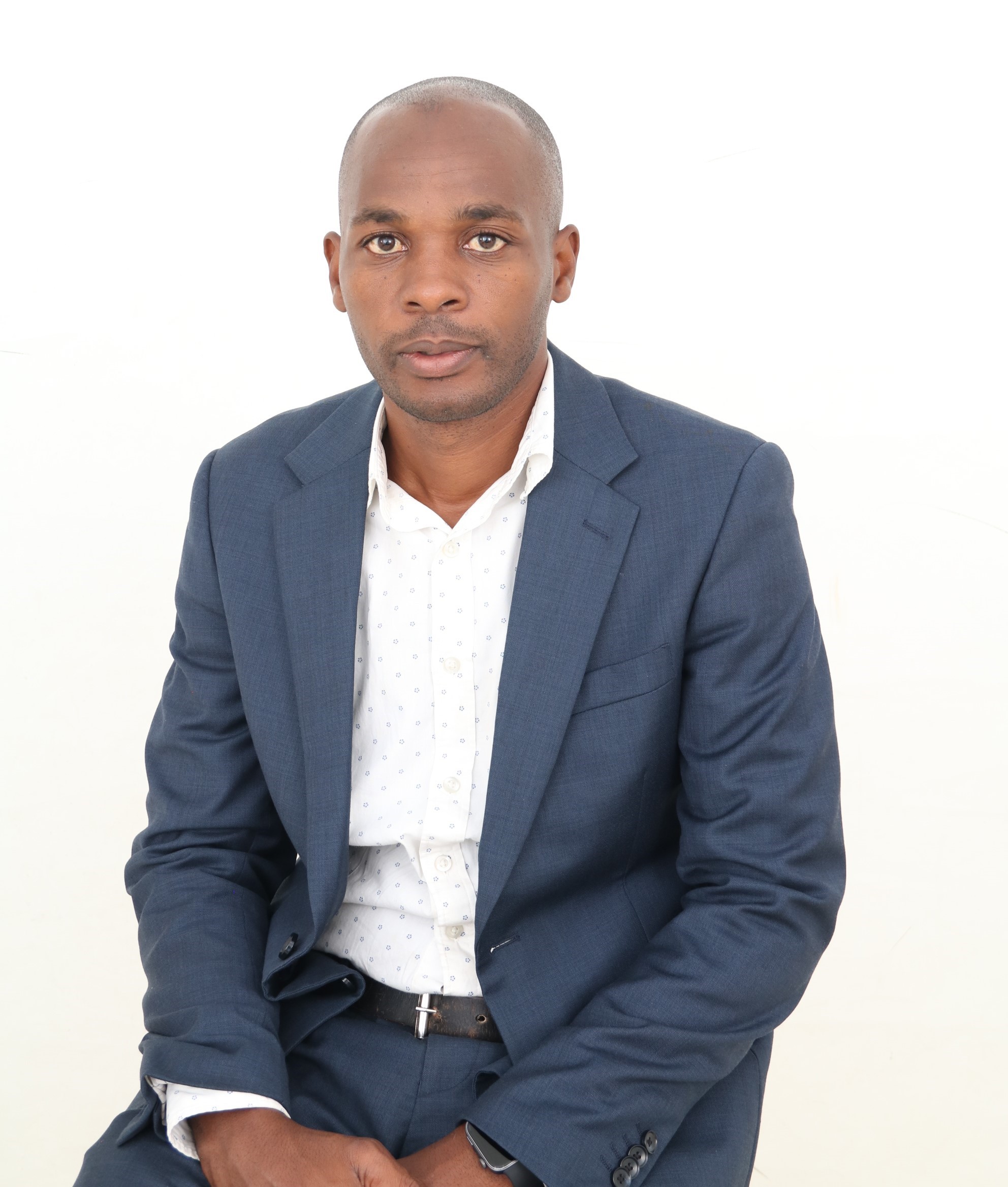
Who is Malizgani? I am the second-born in a family of seven, raised in rural central Zambia. Growing up, I walked long distances to school and almost dropped out because my family could not afford school fees. My mother, a small-scale farmer, encouraged me to keep learning, while my father—a public health worker focused on HIV prevention and community programmes—inspired my passion for public health. Many of my friends in the community dropped out of school due to early pregnancy and poverty, and I was also nearly discouraged from going to college. However, I refused to give up. These early experiences shaped my commitment to promoting SRHR and empowering young people, especially girls and adolescents. I am grateful that when I completed secondary school, I received a government scholarship to study at the University of Zambia. I initially wanted to pursue medicine or a health‑related programme, but I could not afford the additional admission fees for medical school, which were slightly more expensive. This challenge directed me toward social sciences, which ultimately strengthened my journey in public health. What was my early career? I began my professional path as a social scientist with a Bachelor of Adult Education and later earned a Master of Public Health in Health Promotion from the University of Zambia and additional training at Bergen University. I am currently completing a PhD in Epidemiology and Global Health in Sweden, and I completed a predoctoral exchange at the University of Miami. I received additional training from the University of Bergen in Norway and Uppsala University in Sweden. I have more than 14 years of experience in public health research, NGO programming, and government service. My early work included HIV prevention, gender-based violence programming, and WASH interventions. I also worked under the Ministry of Local Government and Community Development, focusing on gender, youth empowerment, and community development. Finally, I have also led and managed large-scale research projects funded by USAID, the University of Miami, WHO, the Global Fund, the Swedish Research Council, UNICEF, and other global partners. What is my research background? I am a public health researcher and lecturer with over 10 years of experience at the University of Zambia, and a PhD candidate at Umeå University, Sweden. My research focuses on adolescent SRHR, community health systems, collaborative governance, and health policy. I have collaborated with research teams in Zambia, Sweden, the USA, Norway, Uganda, Lesotho, South Africa, Mozambique, Ethiopia, and Malawi. Across these countries, I have contributed to research on infectious diseases, gender, SRHR, and community-based interventions. My strengths include implementation science, multisectoral collaboration, and strengthening community health systems across Africa. -
Education & Training
Education
Professional Positions
-
Honors & Awards
Predoctoral International Exchange Fellow – University of Miami (2025) Seed Grant Awardee – University of Michigan / CIRHT (2024–2025) Senior Collaborator – Global Burden of Disease Study, University of Washington (2021–present) Principal Investigator – Swedish Research Council Project (2022–2026) Research Grants – CISMAC & RISE Projects, Norway Mutual Mentorship on Gender and Health – University of California Davis & USAID (2016–2017) Research Fellow – University of Alabama at Birmingham (UAB), NIH & UNZA (May 2017–May 2018)
No result found
-
Teaching Interests
Paul teaches courses in Community Health, Public Health Practice, and Research Methods in Public Health. He has developed and facilitated training programs on community-based approaches to health promotion and disease prevention. His teaching interests focus on capacity building in resource-limited settings and translating research findings into community health practice. -
Research Interests
Depression and substance use. I have worked extensively with under-represented minority populations, developing behavioral interventions and addressing depression and substance use in the US and internationally, examining the impact of trauma, depression and substance use on intervention outcomes. My work has addressed issues related to couples and the experiences of women during the perinatal period, examining the influence of trauma, depression and intimate partner violence on health outcomes. Our team has most recently examined the intersection of COVID, vaccine, and HIV, and of depression, substance use, cardiovascular disease, and HIV. International Positive Prevention. Our research in Argentina, sub-Saharan Africa and India addresses positive prevention, i.e., preventing transmission and optimizing adherence and health among HIV-infected men and women. Our teams in Argentina successfully intervened with providers to re-engage challenging patients lost to care. Our teams in Zambia, India and South Africa conducted pilot studies and clinical trials of group interventions with HIV-infected and high-risk women, followed by interventions with sero-positive and sero-discordant couples to reduce HIV transmission, and developed a comprehensive intervetion. Our teams in India identified cognitive deficits associated among HIV infected patients, and made recommendations for revisions to normative data and attention to depression in this population. Comprehensive HIV intervention in South Africa. Our comprehensive intervention, which addresses ART adherence, transmission and optimal health, was adapted for South Africa for HIV-affected couples and individuals for HIV-affected couples attending antenatal clinics, in conjunction with the prevention of mother to child transmission of HIV (PMTCT) program. Couples participating in the intervention were more likely to utilize problem-solving communication than in violent confrontations, and mothers with higher self-efficacy were more likely to deliver healthy babies. Today, the program is currently used among rural, HIV-infected pregnant South Africa women, building on the potential contribution by men to preventing HIV transmission to infants. This was the first study to evaluate the relative impact of involving men in a PMTCT program, and is currently being disseminated in rural SA using implementation science methodologies. Results highlight the high rates of depression and suicidality among pregnant women in rural communities, the importance of intervention targeting depression and its potential influence on infant cognitive deficits. Reducing HIV transmission between sero-discordant and concordant positive couples. We designed a demonstration project to reduce HIV transmission among Zambian sero-discordant and concordant positive couples (The Partner Project). We illustrated the relative importance of acceptability, partners and skill training in reducing sexual risk behavior among established couples in Zambia. We translated the Partner Project to urban Zambian community health centers and illustrated that when conducted in the community, the Partner intervention achieved even greater reductions in risk behavior. Results were used to explore sexual risk among adolescent girls and young women in rural and urban Zambia and to characterize vaginal sexual practices in Zambia and the USA associated with increased HIV transmission. -
Publications
-
Professional Activities
Principal Investigator: CIRHT/University of Michigan & University of Zambia Principal Investigator: CSE Collaborative Governance (Swedish Research Council) Advisory Board Member: Toolkit for Scaling Up Comprehensive Sexuality Education (CSE) – UNESCO, WHO, UNFPA Senior Collaborator: Institute for Health Metrics and Evaluation (IHME), Global Burden of Disease Study – University of Washington Managing Editor: Community Health Systems Journal (2022–2024) Lecturer: University of Zambia, School of Public Health Member: Research Board, University of Zambia, School of Public Health
No result found